
Agentic development fails without context.
We provide it.
Driver is the best compiler for codebase context.
Usecases
How Teams Use
Codebase Context
Teams across enterprise and high-velocity startups use Driver to give their AI agents the codebase context they need. From migrations to support, here's how engineers are putting Driver to work.





Driver’s rigorous context
brings determinism to
agentic coding
Context for Every Codebase
Query up-to-date context for any branch on any codebase hosted on Driver from any MCP client.

The Codebase Atlas
Agents orient from a thematic map of subsystems, right-sized to the codebase, then open only the sections a task touches, each with what the code does, what must change with it, and why.
Effective Navigation
Agents locate relevant files and folders quickly with Driver's code map, then follow their relationships for detail.
Details at Scale
Agents trace how a system arrived at its current shape from Driver's commit-complete changelog, year by year and month by month.
How it works
A compiler-inspired
architecture.
Governance
Getting started
with Driver.
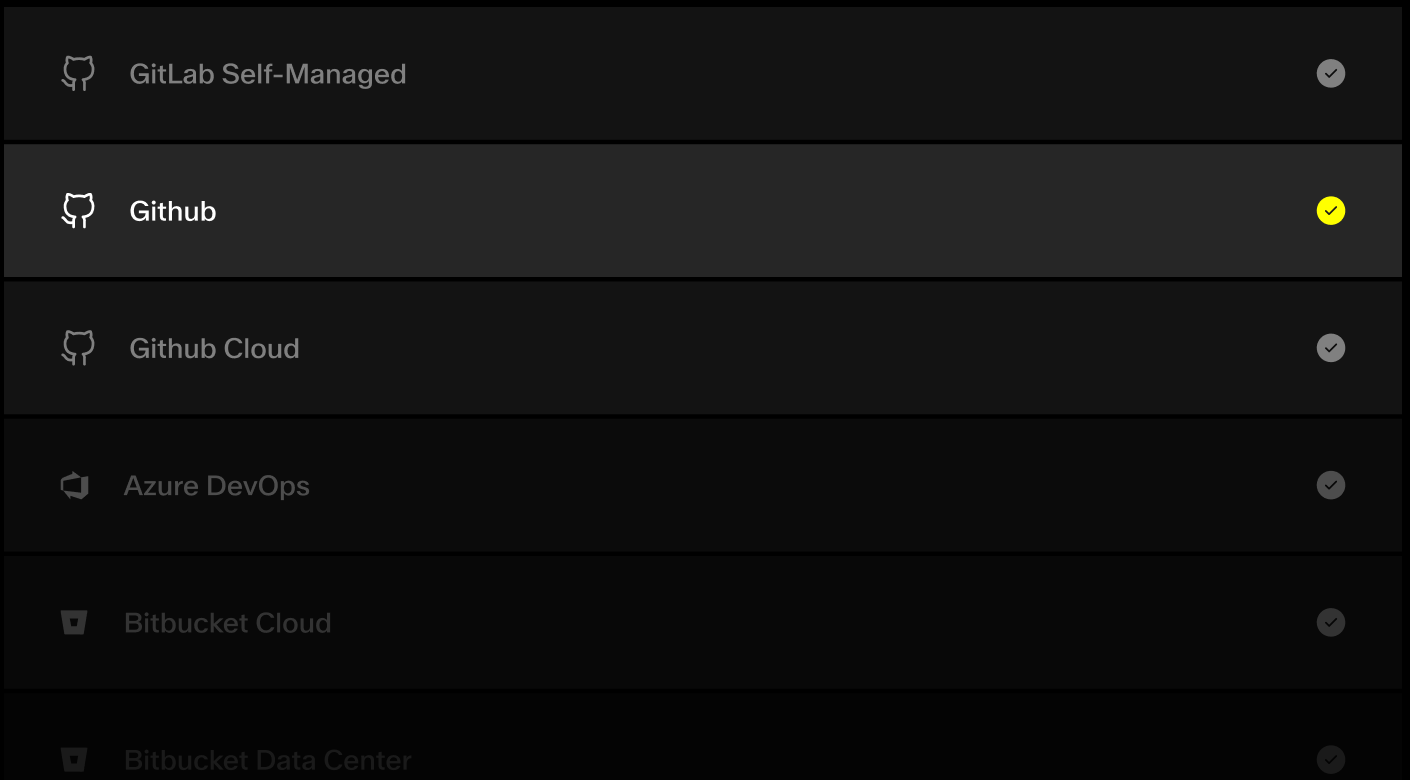
1. Connect your SCM
Link Driver to GitHub, GitLab, Bitbucket or any other SCM system to ingest codebases and create context.
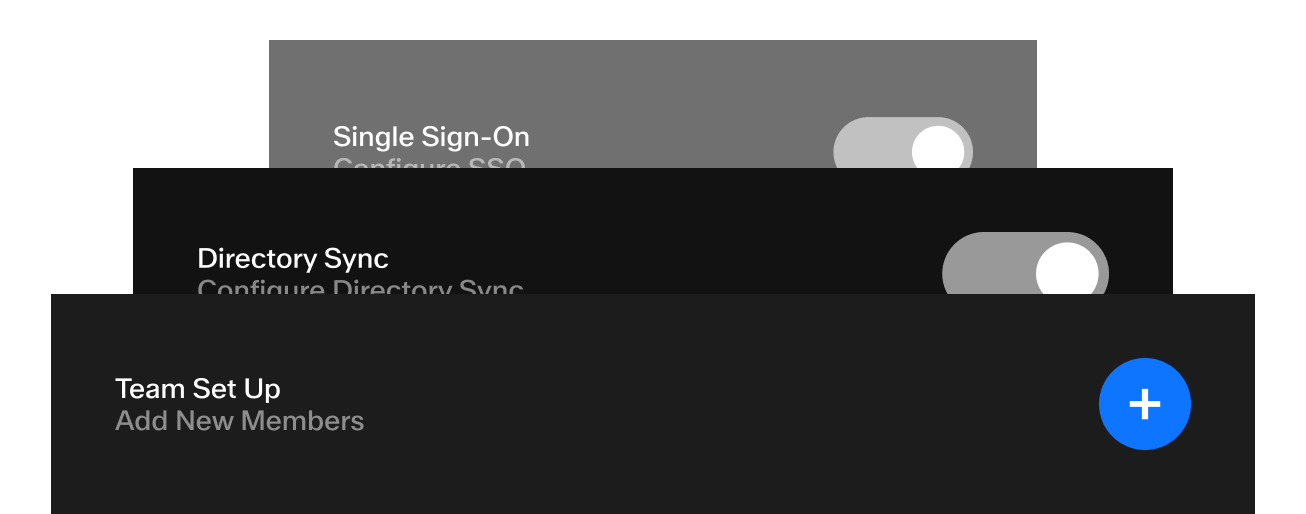
2. IdP & SSO
Set up SSO, enable SCIM, and map IdP groups to Driver teams to provide access to context for your organization.
3. Integrate Context Anywhere
User-authenticated access via MCP server for interactive agents, M2M authentication for headless agents, and REST API for server-side access.
Customer Testimonial
We didn't think our agents could do what they're doing now. What changed wasn't the model. It was the context. That's what Driver gave us and that's why we're scaling it across the entire organization.
Matt Nassr,
Head of Data Engineering, Optiver
90%
Reduction in manual context management
5x
Increase in AI coding agent effectiveness
2
Weeks from pilot to deployment
FAQ
Frequently Asked
Questions
Driver compiles codebase context ahead of time, the way a compiler compiles code. The output is symbol-complete, exhaustive, and structured for consumption by AI agents.
Without Driver, agents explore your codebase ad hoc every session. They touch only a fraction of the code, exhibit high variance, and require engineers to manually point them in the right direction. The common workarounds are markdown files checked into repos, RAG pipelines, or elaborate grounding prompts. These help but don’t scale. Markdown goes stale and causes merge conflicts. RAG chunks code into text fragments and loses the structural relationships that matter most.
With Driver, one MCP call delivers exhaustive, high signal-to-noise context for any task. The agent starts every session from a position of excellent context across arbitrarily large codebases, including cross-codebase queries, without the engineer assembling it by hand.
Most approaches to codebase context fall into three categories: manual curation (markdown files, CLAUDE.md, grounding prompts), retrieval augmented generation (RAG), or continuously operating agents that build up memory over time. Each helps to a point, but none can guarantee exhaustive, consistent context at scale.
Manual curation goes stale with every commit and creates merge conflicts across teams. RAG chunks code into text fragments and retrieves by keyword similarity, destroying the structural relationships that matter most. A codebase with n symbols has n-squared potential relationships. Chunking loses that structure. Continuously operating agents accumulate understanding over time but remain fundamentally ad hoc, without the structural guarantees of a compilation process.
Driver takes a compiler approach. We parse every file, build complete syntax trees, resolve every symbol, trace call chains, and map dependencies across services. The output is symbol-complete, deterministic, and pre-computed. Given the same codebase state, Driver produces the same context every time. No sampling variance. No missed dependencies because of a keyword mismatch.
The difference in practice: RAG and manual approaches are probabilistic. Sometimes they find what the agent needs, sometimes they don’t. Driver’s compiler architecture is deterministic. It works because the analysis was done ahead of time, exhaustively, with full knowledge of the codebase structure.
Driver connects to your source code management system (GitHub, GitLab, Bitbucket, Azure DevOps) and compiles codebase context directly from your repositories. Context stays in sync automatically as developers commit changes.
Driver’s MCP server works with any MCP-compatible agent, including Claude Code, Cursor, and IDE extensions. Engineers connect once and have access to codebase context wherever they work. Setup takes minutes per developer.
Because Driver operates at the SCM level rather than the IDE level, context is available to any tool and any team member, not locked into a single product. This horizontal positioning means your investment in codebase context works across your entire toolchain.
Driver supports all languages. The compiler architecture processes any language out of the box by breaking down source code at the symbol level and building content at higher levels of abstraction in multiple passes.
Driver adds specialized optimizations through language-specific front ends that build rigorous syntax trees and symbol tables via static analysis. This handles the uniqueness each language brings: Ruby metaprogramming, C++ namespaces, C compile-time flags, TypeScript generics. The output is symbol-complete for specialized languages, meaning every symbol in the codebase is detected and resolvable.
Enterprise codebases are rarely one language. Most teams have at least a handful if not a dozen languages. Infrastructure is code. Backends in one language, frontends in another. Configuration in YAML. Build scripts in Bash. Terraform. Driver handles this heterogeneity out of the box.
Yes. Driver models each repository as a DAG and processes them independently. Multiple repositories can be combined as disjoint graphs to build cross-repo context and scope.
All compiled context is exposed through the MCP server, so agents can reason over multiple codebases even if they aren’t cloned locally. This is critical for enterprise environments where bugs and features frequently span multiple repositories. We’ve heard from customers who burned days or weeks trying to resolve bugs that turned out to be multi-codebase problems, because they didn’t even know which codebase to look in. Driver’s request_context tool operates across any set of connected codebases automatically. You submit the task and the codebases it touches, then poll for a single brief that spans all of them.
Yes. Driver’s compiler architecture integrates with and models much of its own operations similar to git. Users connect their source code using integrations with the standard source code management providers. This allows Driver to identify and onboard any number of remote branches associated with a given codebase. Driver context is generated and kept up-to-date for each tracked branch using the same foundational compilation engine.
Driver detects whenever a commit or PR lands on a tracked branch and triggers a scoped update. The same structured processing that enables greenfield compilation also enables surgically scoped updates. Only the affected parts of the DAG are reprocessed, so updates happen quickly and automatically.
This solves the maintenance problem that makes manual context curation unsustainable at scale. With markdown files checked into repos, every codebase change potentially invalidates every context document, leading to merge conflicts and stale information. With Driver, context stays current without any engineer maintaining it.
Driver’s compiler architecture produces content that is correct by construction.
The compiler breaks codebases into granular units along a directed acyclic graph (DAG) constructed from the file tree, alongside syntax trees and symbol tables built from static analysis. Producing context for each granular unit is a significantly constrained task. Subsequent passes build content at progressively higher levels of abstraction: symbol extraction, symbol documentation, file-level technical documentation, folder-level documentation, and codebase-wide synthesis.
This shifts the burden of correctness from LLM inference to the structure of the decomposition. The same architecture applies to both greenfield generation and incremental updates. The result is accuracy, consistency, and exhaustiveness at a level that ad hoc techniques like RAG cannot achieve, because RAG samples from chunked source code rather than compiling structured understanding.
Create an organization, connect your code, select a codebase, and generate context with one click. You can then connect via MCP for agent context and invite teammates. Most teams are up and running in one day.
Driver offers flexible deployment options designed to meet different security, compliance, and scalability needs. All deployments feature SOC 2 Type II compliance, encryption during transfer and storage, and enterprise-grade safeguards to protect your intellectual property.
- Multi-Tenant SaaS: The fastest way to get started, providing cost-effective onboarding with strict data separation between organizations. Ideal for teams that want speed and simplicity without sacrificing security.
- Single-Tenant SaaS: A dedicated environment hosted in a private VPC with isolated database, storage, models, and task processing as well as optional IP restrictions or private network bridges (VPN or VPC peering) for enhanced control.
- Custom Deployments: Tailored for large enterprises with advanced requirements, including support for private AI APIs, VPC peering to dedicated model instances, and out-of-the-box compatibility with AWS Bedrock, Google Vertex, or Azure OpenAI.
These options give organizations the flexibility to balance cost, speed, and control, while ensuring deployment aligns with internal IT and compliance requirements.
Driver enforces access control at the codebase level, ensuring context is only visible to authorized users. Administrators can manage codebase access directly or organize users into teams to simplify access management across multiple codebases. For enterprises, Driver integrates with identity management platforms to provide centralized role-based access control and single sign-on, making it easy to enforce security policies while supporting seamless collaboration.